Table of Contents
How To Paint Kitchen Cupboards & How To Paint Furniture
7 simple steps to help you achieve the best results, including tips and tricks from the founders.
This general guide is designed to show you the process on how to use SatinHaus paint on kitchen cupboards, cabinet doors, drawers, and furniture. Following each step carefully will help you achieve a smooth, durable, professional-looking finish, whether you are refreshing a full kitchen or updating a single piece of furniture. Each step is very important to the success of the longevity of your finish. Completing the process correctly is a non-negotiable for the visual and the tactile aesthetics of your project. For more in-depth tutorials, please check our social channels.
Step 1: Degrease Item – For pre finished/pre painted surfaces only
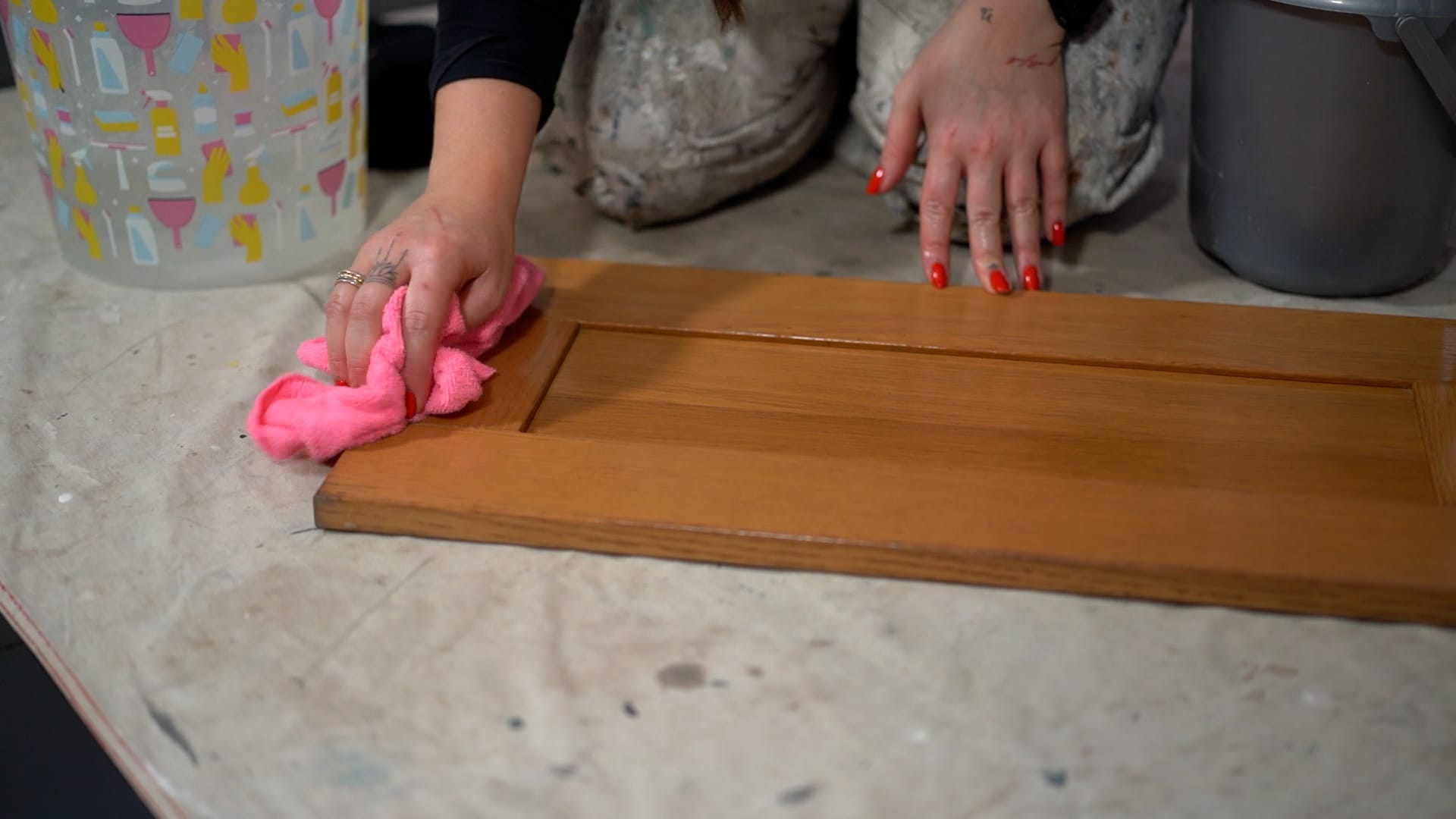
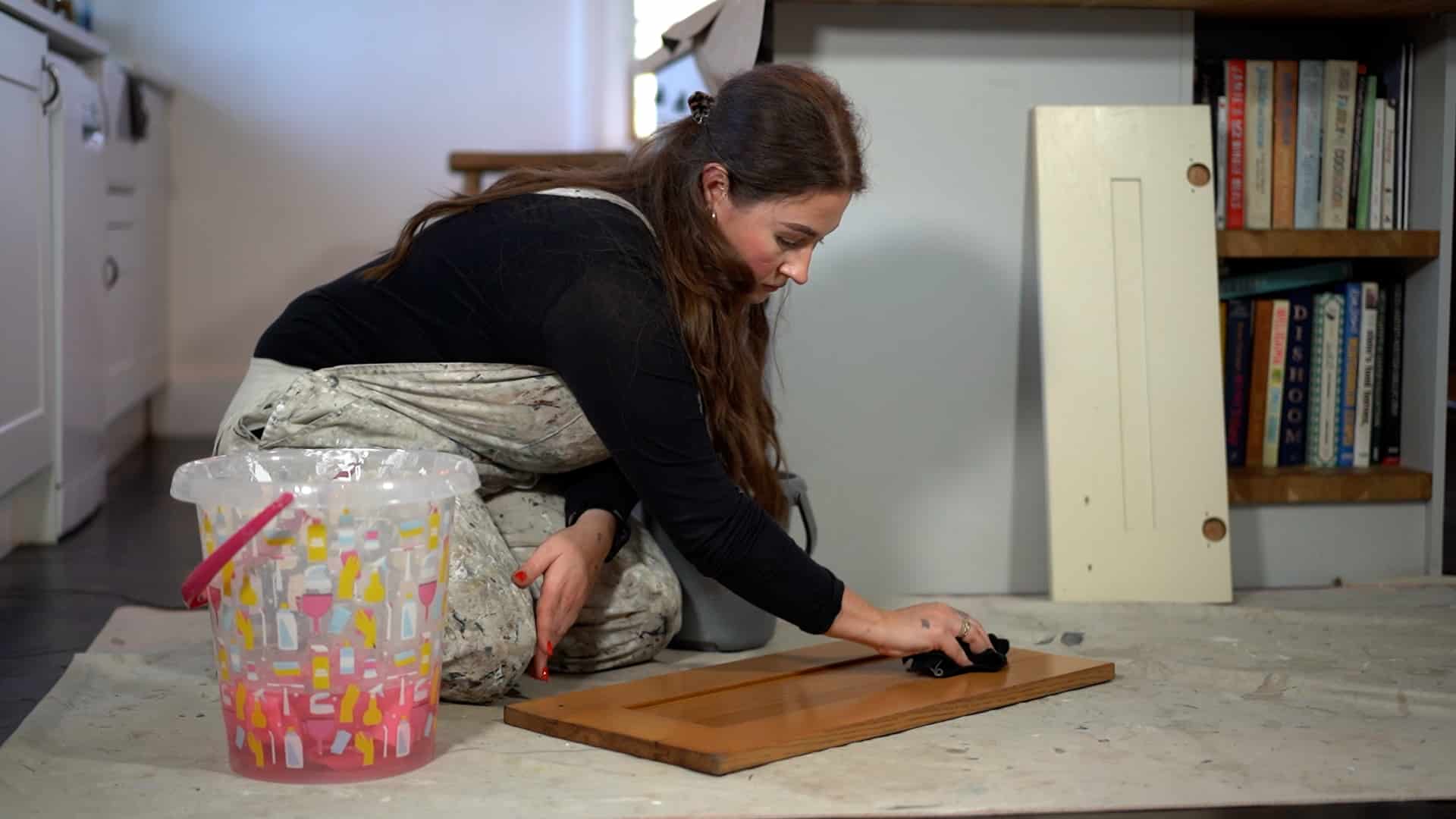
Preparation is essential, particularly in kitchens where grease and residue build up. There may be certain areas that require a stronger degreaser (sugar soap).
*We wouldn’t recommend this step on bare wooden surfaces and MDF.*
We recommend:
- Two buckets of warm water: one with your chosen degreaser and one with clean water
- Three microfibre cloths: one for degreasing, one for rinsing, and one for drying
- Wring cloths out well to avoid over-wetting surfaces.
- When cleaning your item down, pay close attention to cupboard edges, door profiles, drawer fronts, and areas around handles. These are the places grease and oils tend to linger.
- Dry thoroughly before moving on.
Step 2: Sand & Hoover
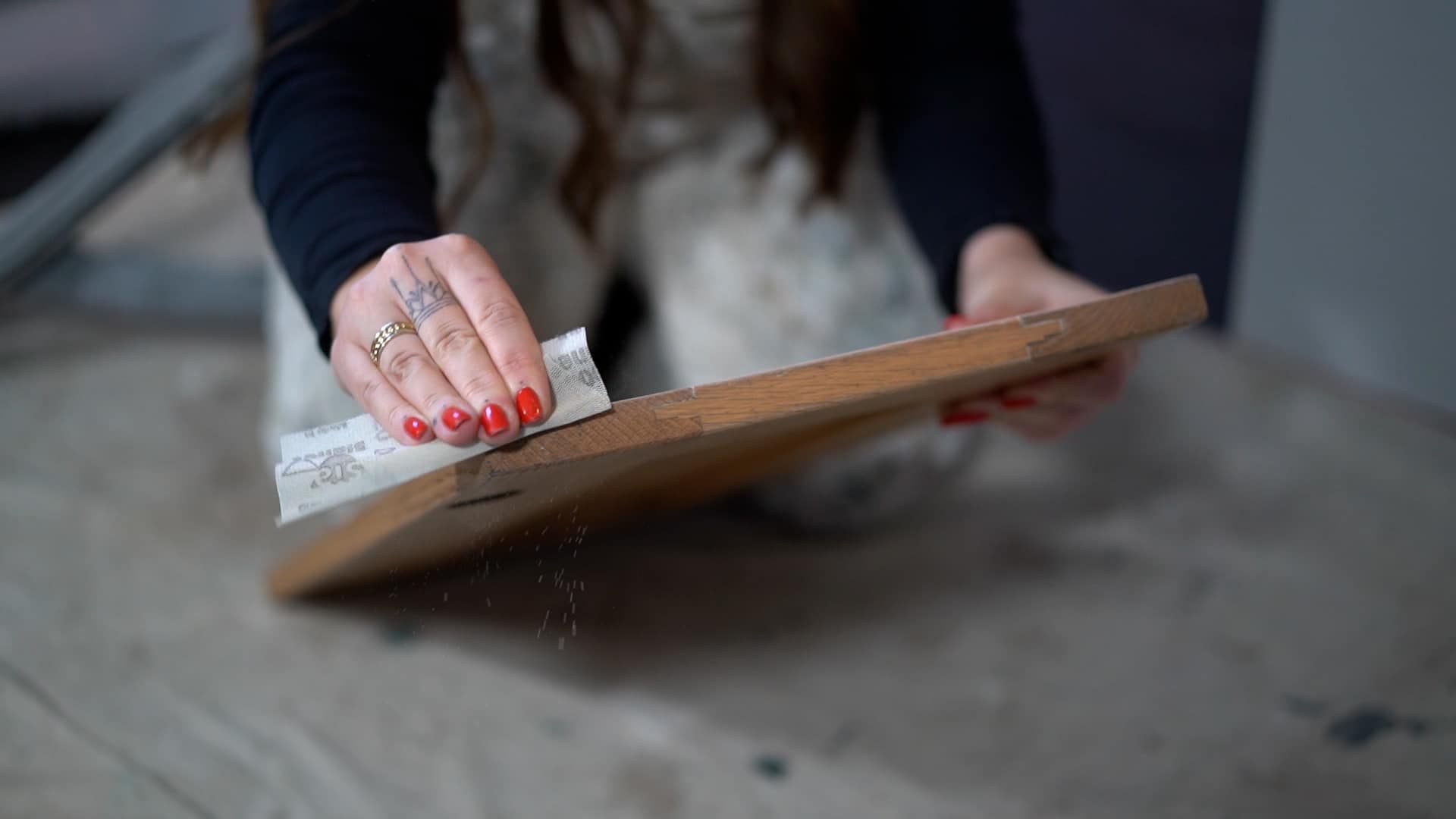
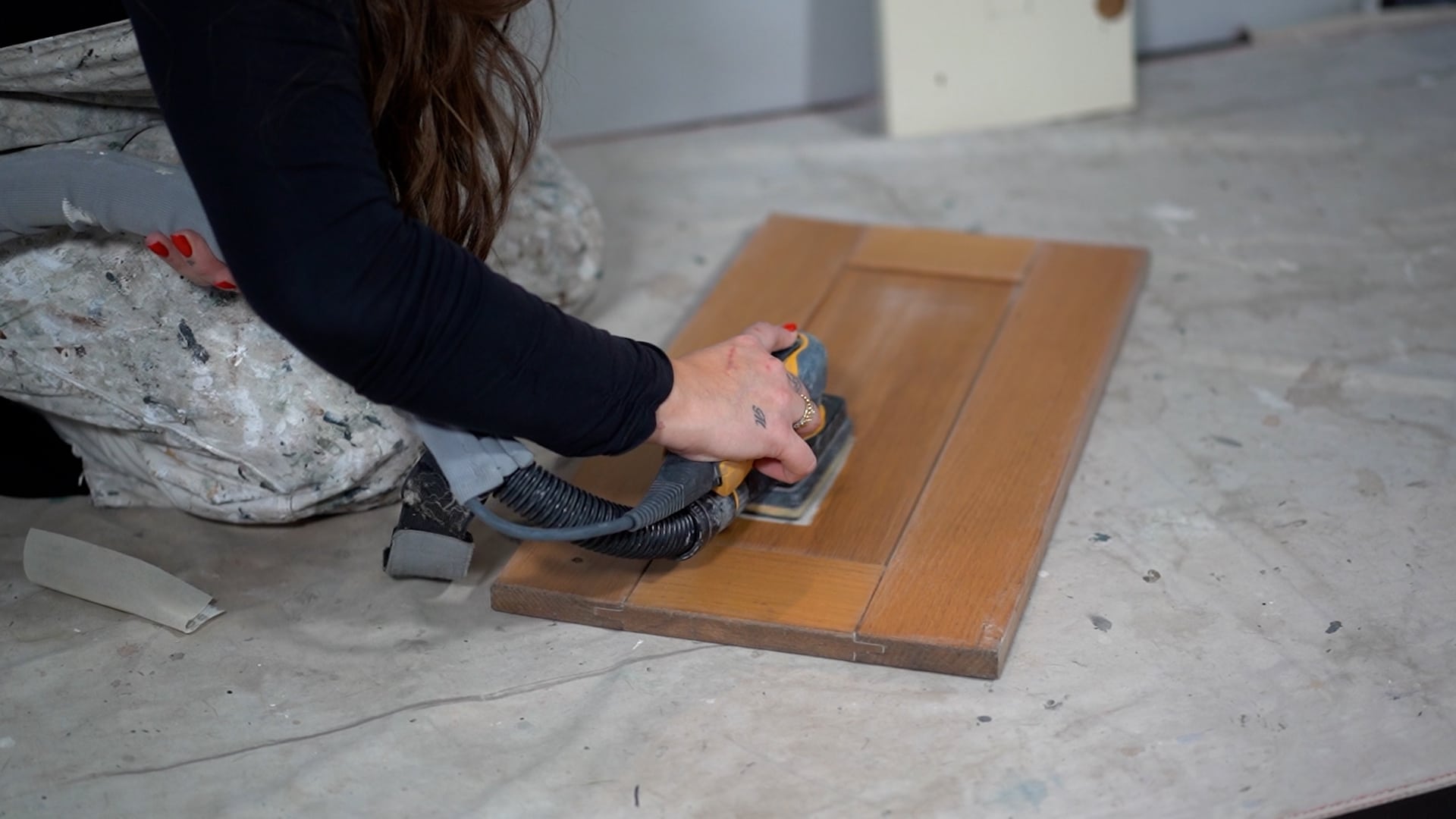
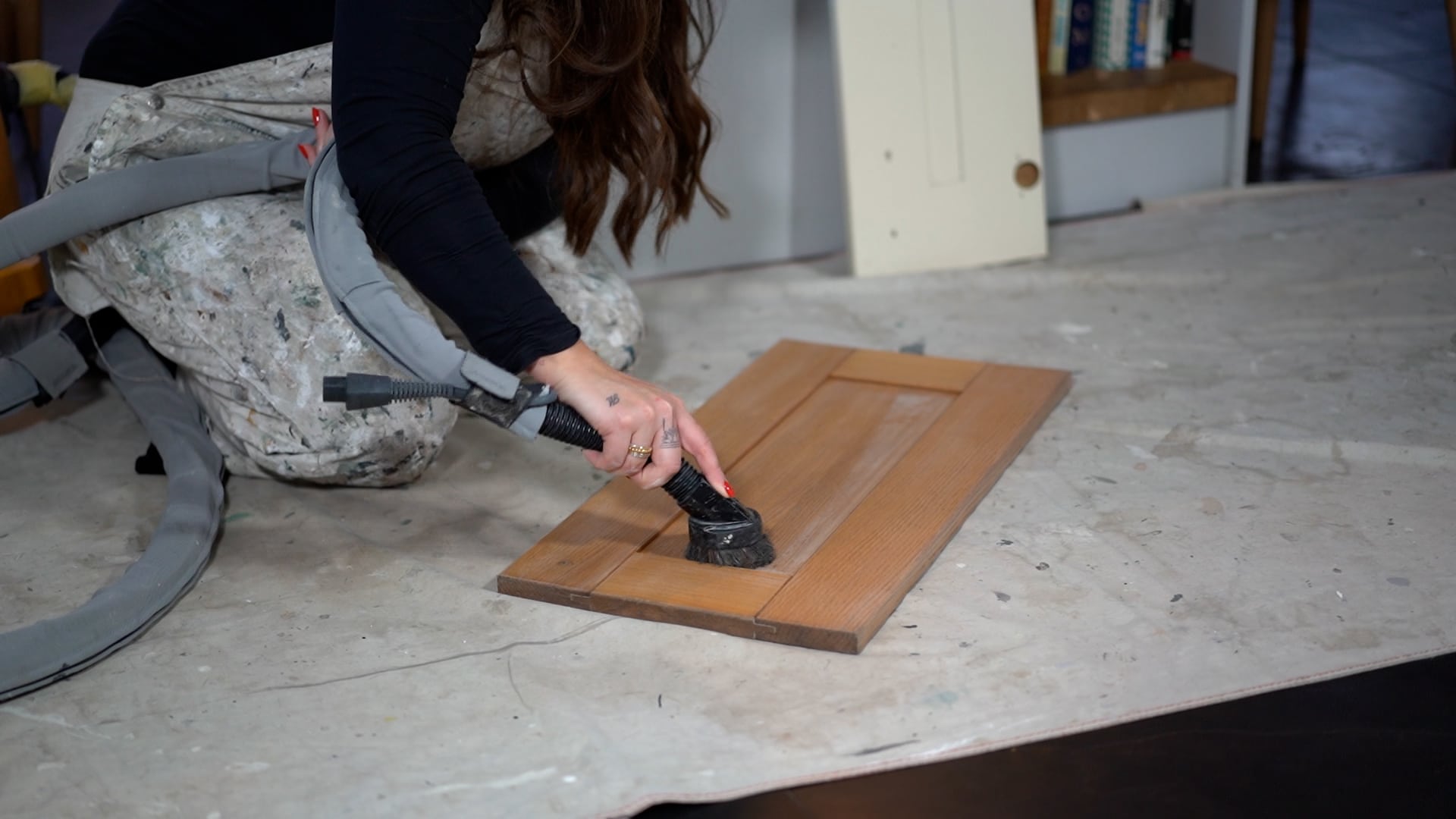
Light sanding creates the ideal surface for SatinHaus paint to adhere to.
We recommend:
- Using a combination of hand sanding and an electric sander (attached to a hoover) if available. A mix of sandpaper grades is also helpful, especially for cupboard edges, corners, door grooves, and detailed furniture profiles.
- The aim is to remove the existing sheen, not to aggressively scratch the surface.
Once sanding is complete:
- Hoover the cupboards or furniture thoroughly
- Hoover the surrounding area to reduce dust
- Wipe down with a tack cloth to remove any remaining fine particles
Step 3: Prepare Your First Coat
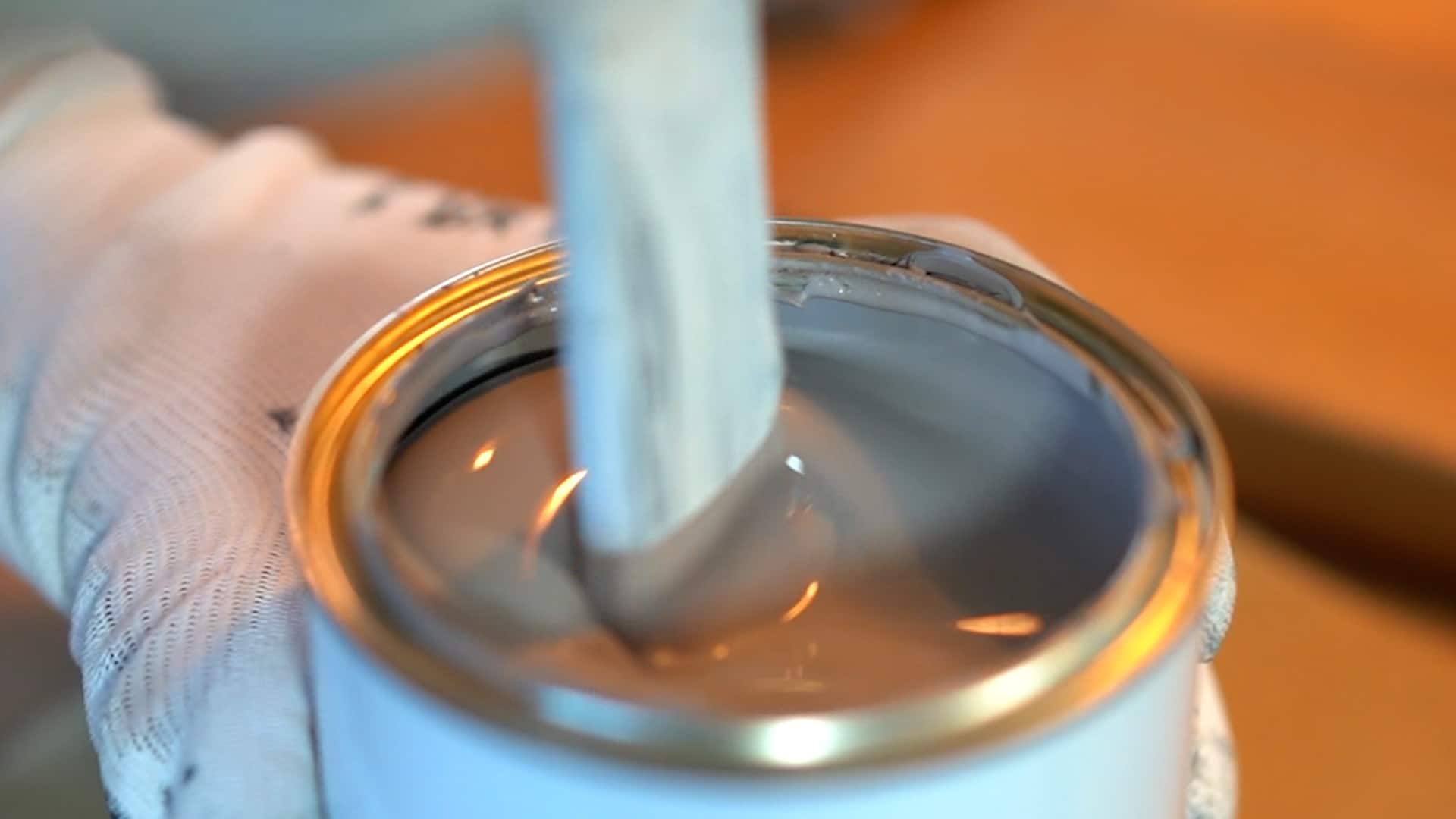
Before applying any SatinHaus paint, give the surface one final wipe with a tack cloth or clean microfibre cloth to ensure it is completely dust free.
Stir your SatinHaus paint thoroughly before use.
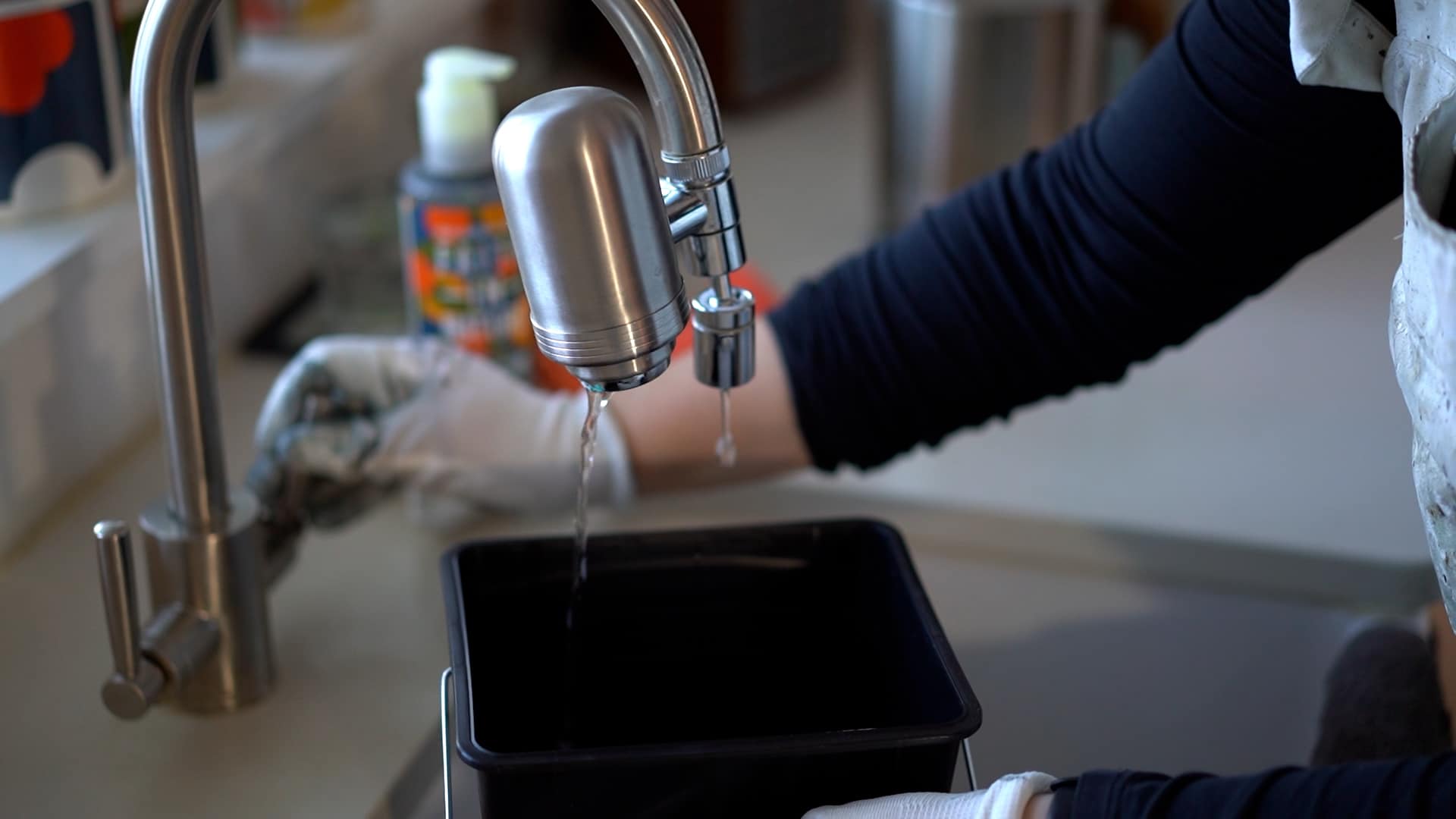
Unpainted/Bare timber: For the first coat, we recommend thinning the paint by adding approximately 10% clean water to the amount you plan to use. Mix thoroughly before application.
Previously painted surfaces: SatinHaus can be applied directly and does not need to be thinned.
MDF: If you are painting MDF kitchen doors or MDF furniture, you will need to use an MDF primer at this stage instead. This will help prepare the MDF appropriately. When painting MDF, you will need to sand after applying your primer, to get your surface smooth before applying SatinHaus.
For filling and caulking, the best stage depends on the surface you are painting.
Bare wood or MDF: Apply your diluted first coat (or MDF Primer) before filling. Once the filler has dried and been sanded smooth, spot-prime with same mixture to the filled areas before applying your first full coat of SatinHaus.
Previously painted surfaces: Complete any major filling and caulking before applying your first coat of SatinHaus.
Step 4: Apply The First Coat
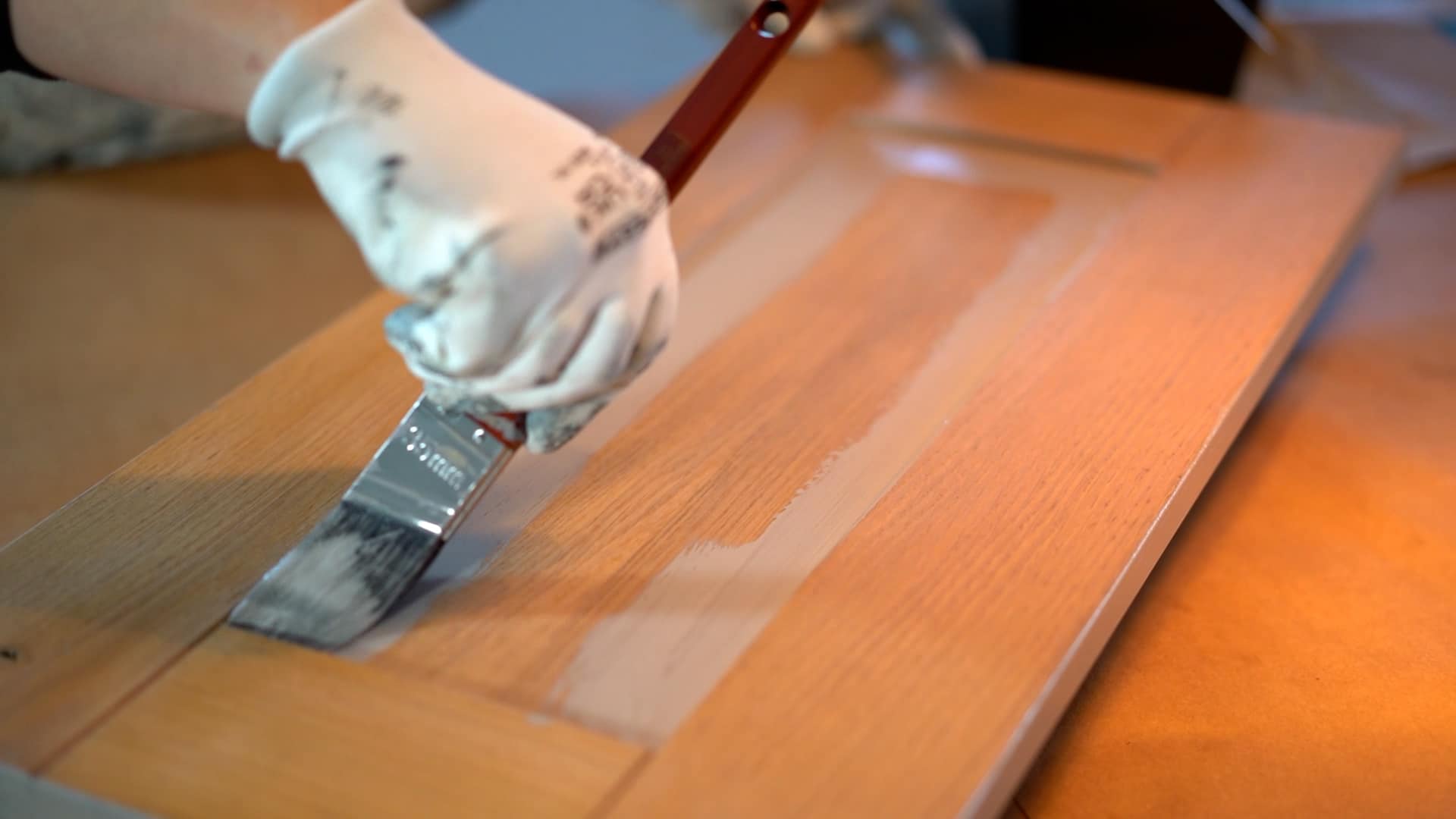


Now everything is prepped, it’s time for the top coats of paint. For kitchen cupboard doors:
- Start from inside panel and work outwards. Keep an eye on edges, rolling them over last.
- Roll the rails first.
- Finish with a smooth, even pass down the stiles.
- Use a brush where needed to work paint into edges and details, then roll over with a foam roller to remove excess paint and soften brush marks.
- Apply even pressure and avoid allowing paint to build up on edges.
The same technique applies to furniture pieces, adjusting roller and brush size to suit the scale of the item.
All doors and pieces of furniture are different in the order you would paint them, however a general rule is start your centre panel, and work outwards. Checking your edges for build up lastly.
Step 5: Between Coats Preparation
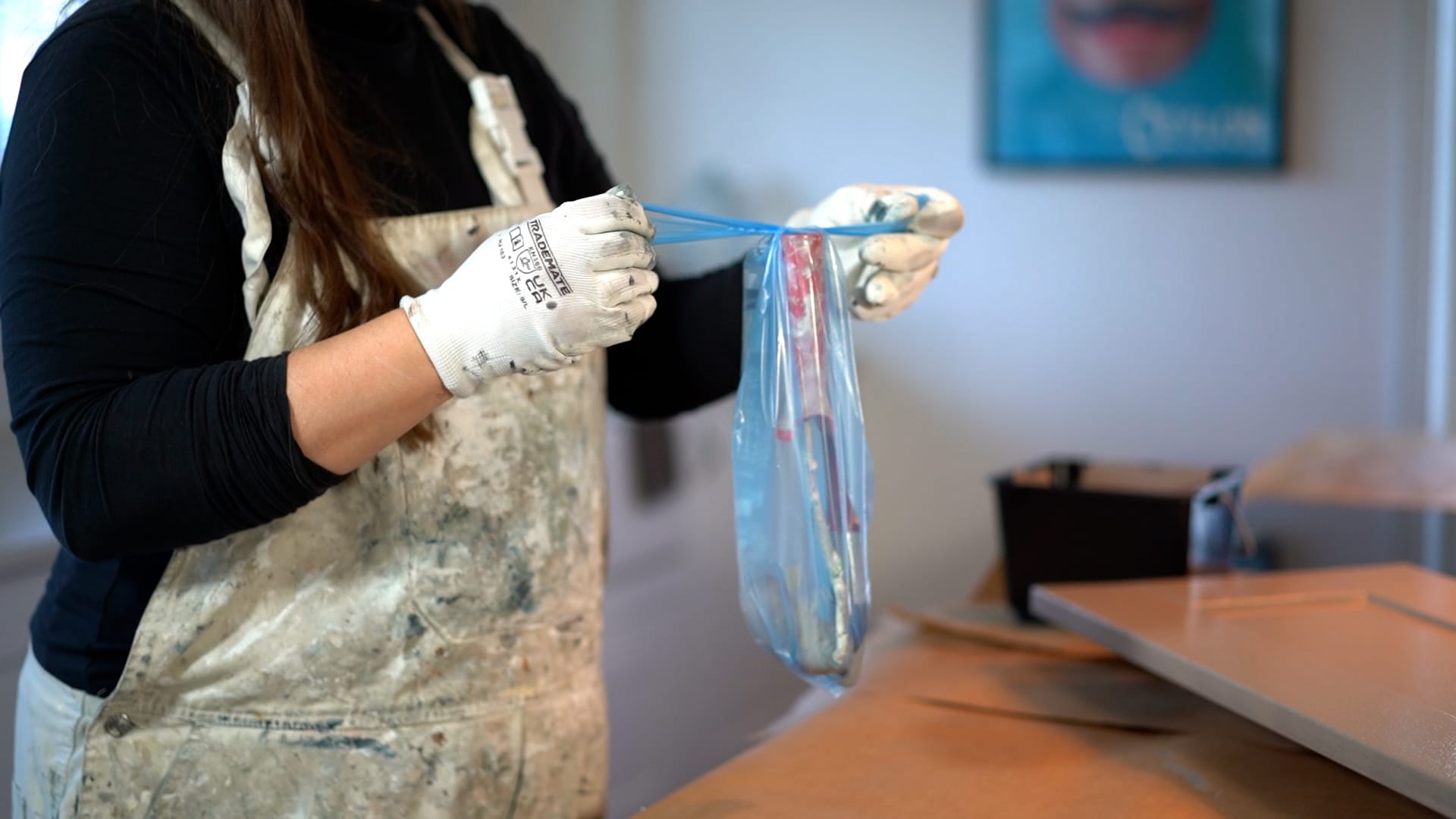
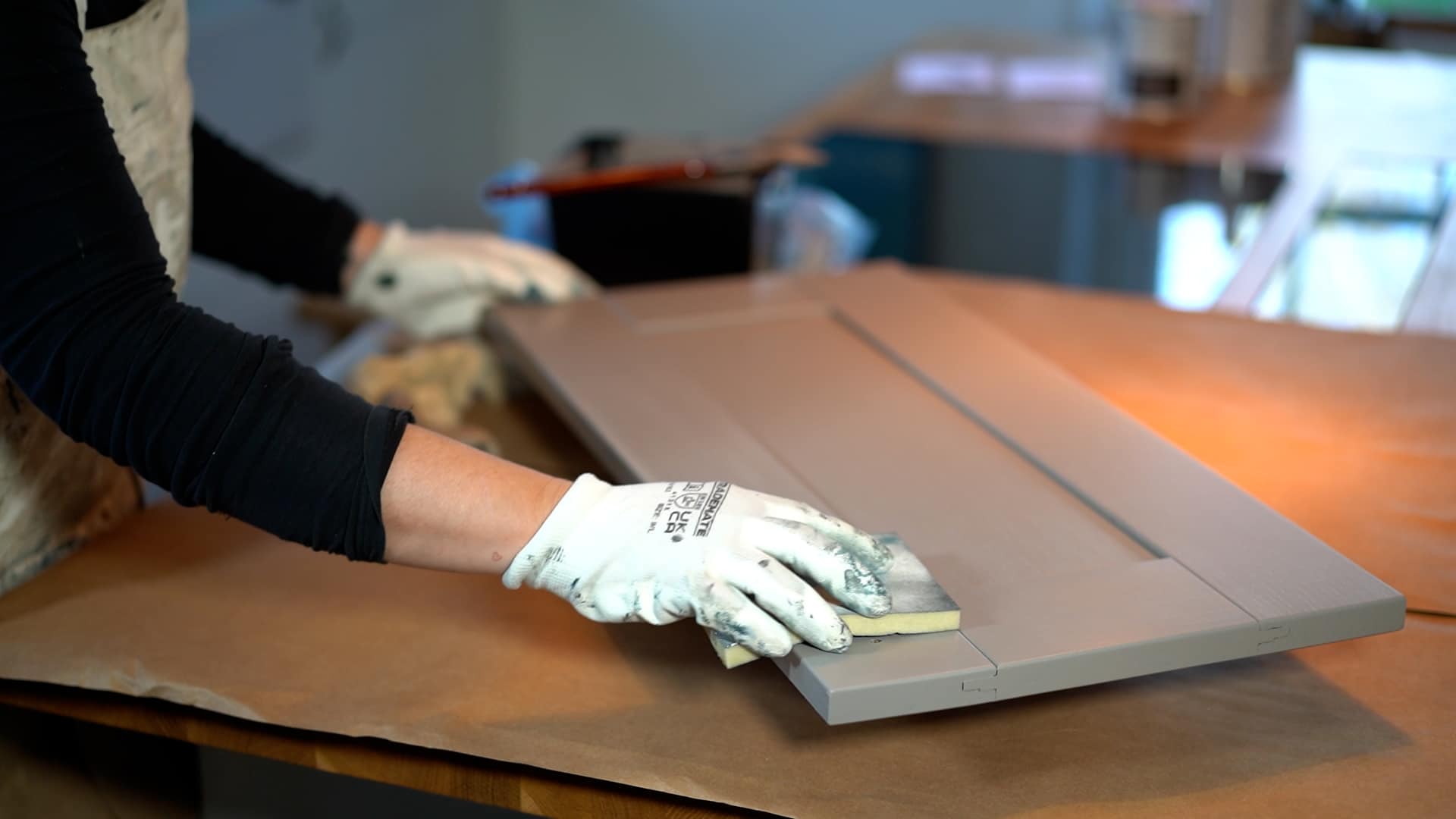
If you are completing your kitchen or furniture project in one day, either wash up, or place brushes and rollers into a sealed plastic bag between coats to prevent them drying out (if washing up make sure they are completely dry before next coat). Keep your paint container covered to protect it from dust.
Before applying the next coat, lightly de-nib the surface using a fine grade sandpaper. This step is especially important on kitchen cupboards, where a flat, refined finish makes a visible difference. Wipe clean to remove all dust.
One day project? Keeping a bag handy to preserve your brush and roller between coats is a must.
Keep an eye out for any fine filling, at this stage that is a must.
Step 6: Apply Final Two Top Coats
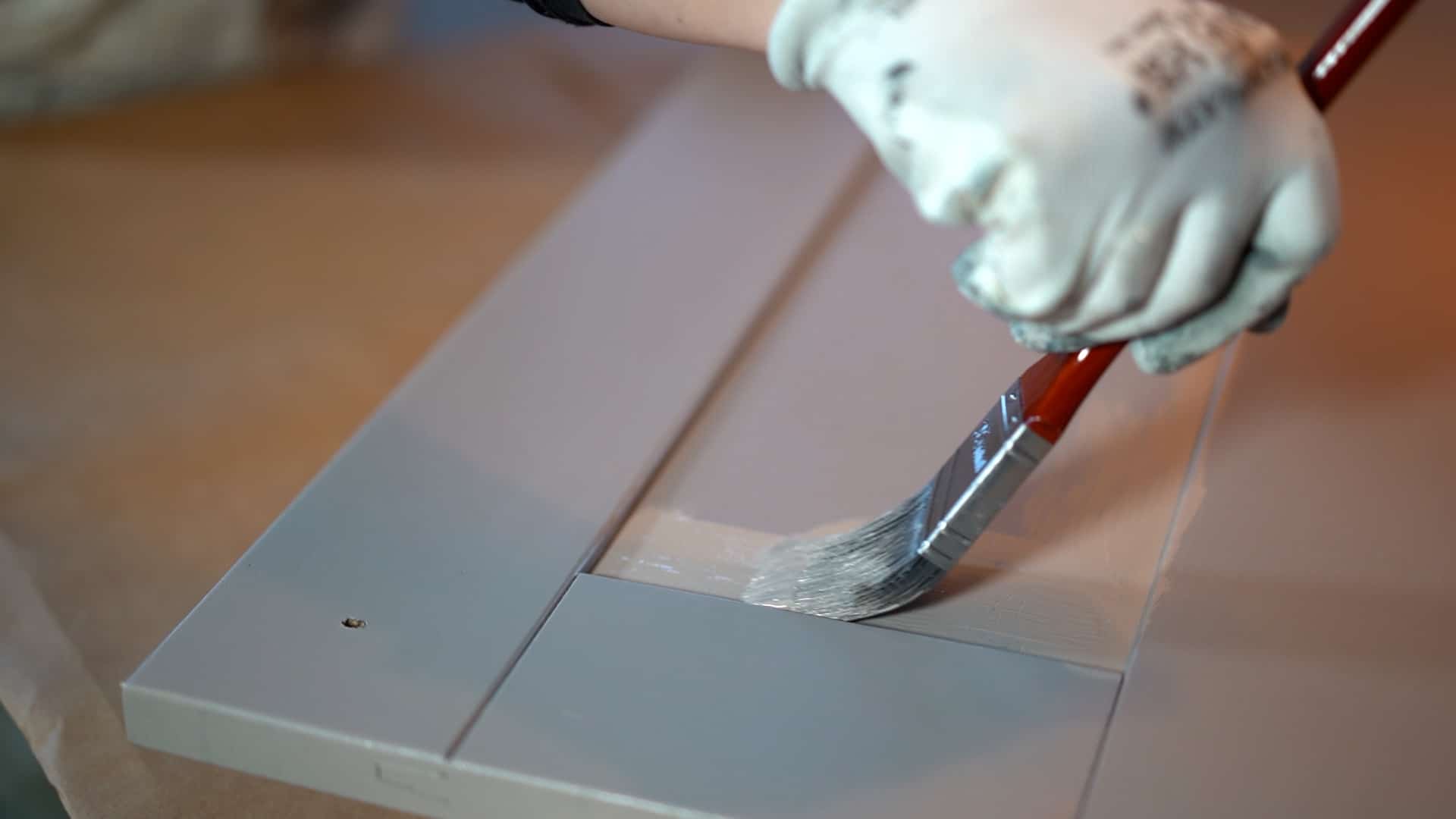
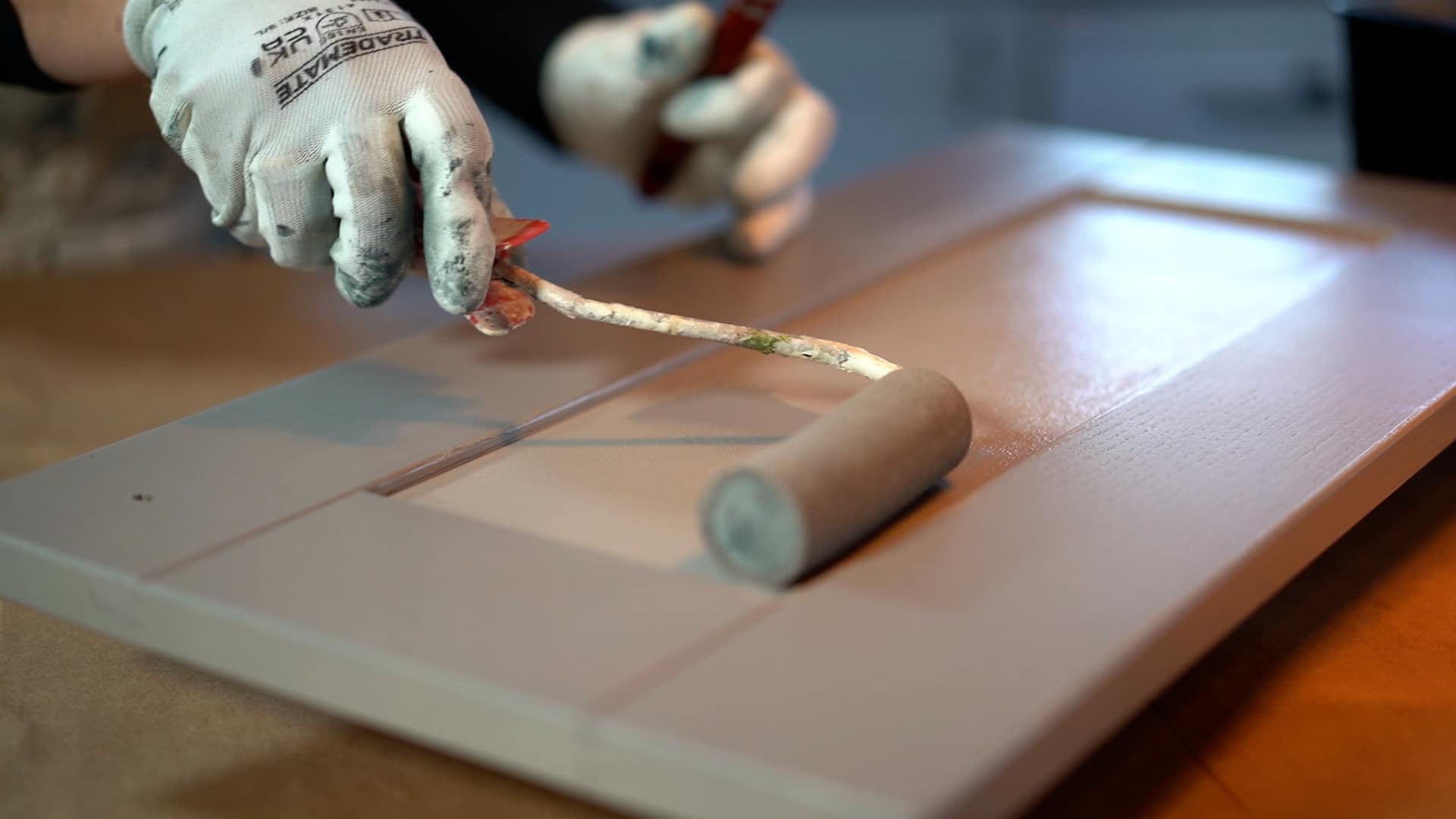
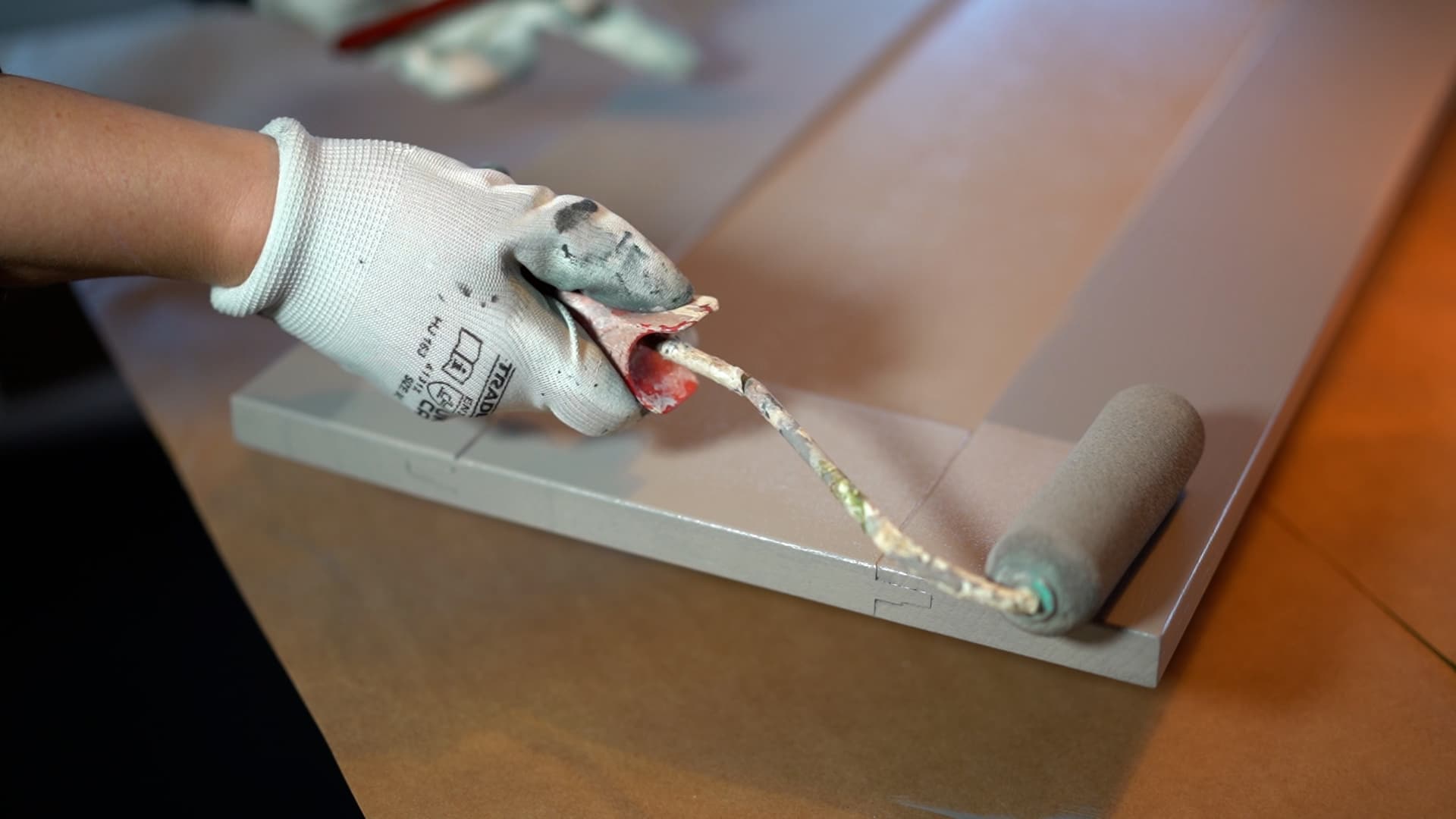
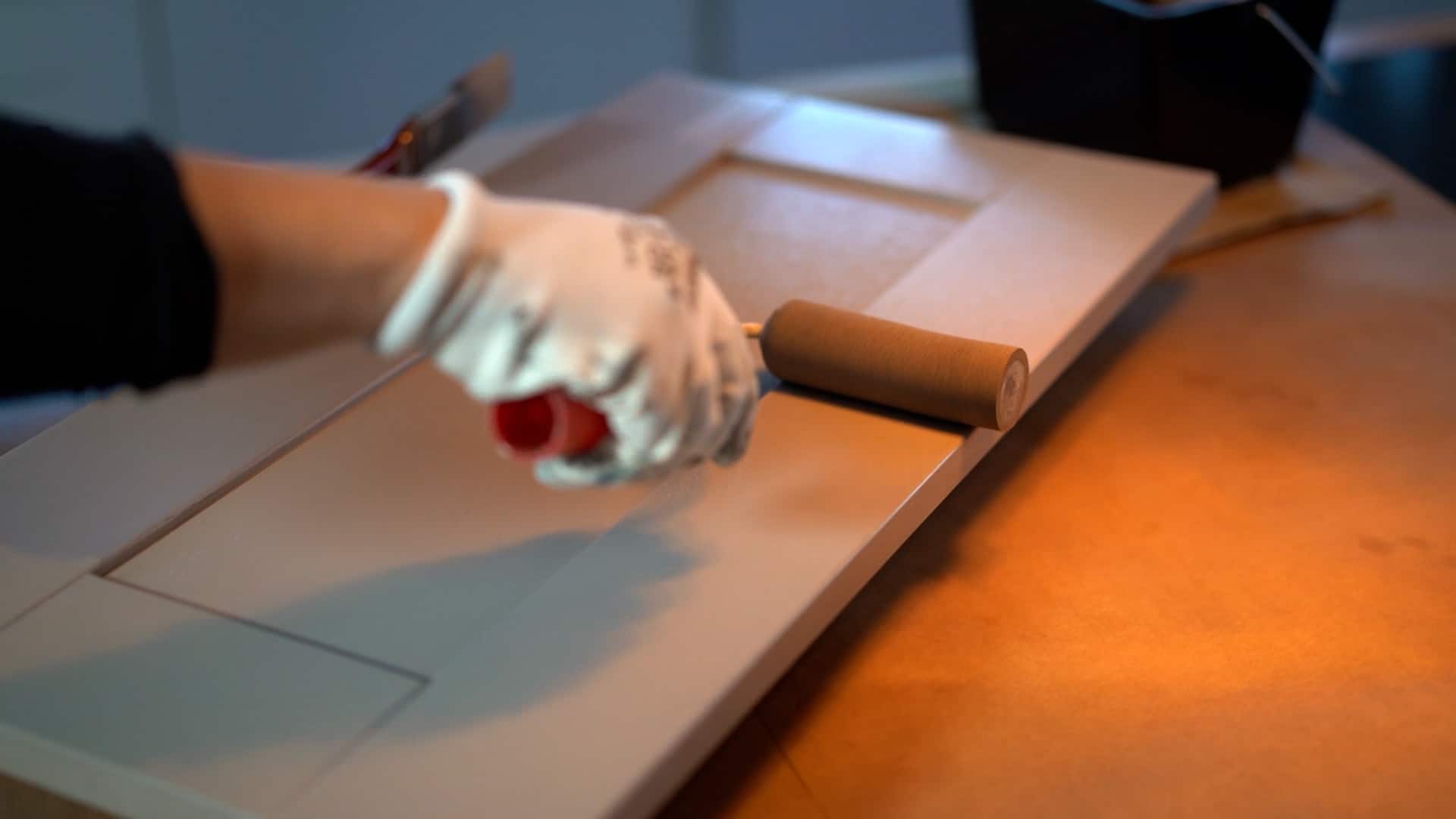
For most projects, SatinHaus is finished with two full coats. In some cases, such as when painting over contrasting shades or depending on the condition of the surface, additional coats may be required. Apply further coats as needed until you are happy with the coverage and finish.
- Apply these in the same way as before:
- Start on edges and detailed areas
- Brush in where needed
- Roll over with a foam roller to level the surface
- Maintain even pressure throughout
We recommend allowing 2-4 hours between coats, however this is dependent on environment.
Work in small areas, keeping your painted edges wet.
Be prepared before starting your painting as things dry quickly, environment dependant.
Always check your edges for build up.
Step 7: Allow To Dry & Enjoy The Finish
Drying times will vary depending on temperature, airflow, and humidity, but SatinHaus is quick drying and well suited to both kitchen and furniture projects.
With careful preparation and application, you will achieve a durable, smooth satin finish that looks professionally hand painted.
Allow for your project to fully dry before allowing intense usage or water to touch the surfaces.
We hope that you enjoy using your SatinHaus paint to transform your projects!
Guiding You With Confidence
If you have any questions on how to use SatinHaus paint, please get in touch.